We get asked about hydronic floor heating constantly — especially on new builds and remodels in Sandpoint, Schweitzer, and the lake-front communities. The short answer: yes, it's worth it on the right project. The longer answer is what this post is for.
What hydronic floor heat actually feels like
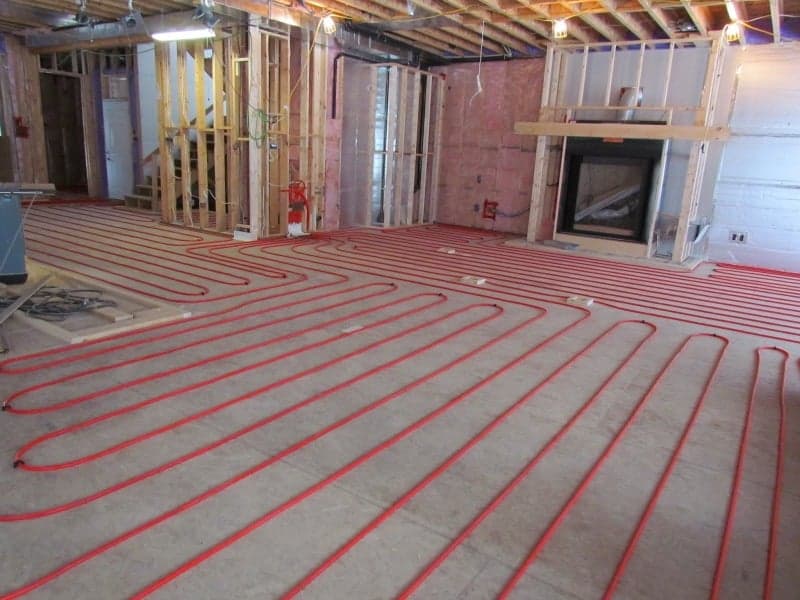
The difference is comfort, not heat output. A forced-air system blasts you with 90°F air for 12 minutes, then nothing for 30. A hydronic floor stays at a constant 75–80°F surface temperature all day. Your feet are warm. The bathroom tile is warm. There are no cold drafts from a register. People who switch don't go back.
The install reality (cost & complexity)
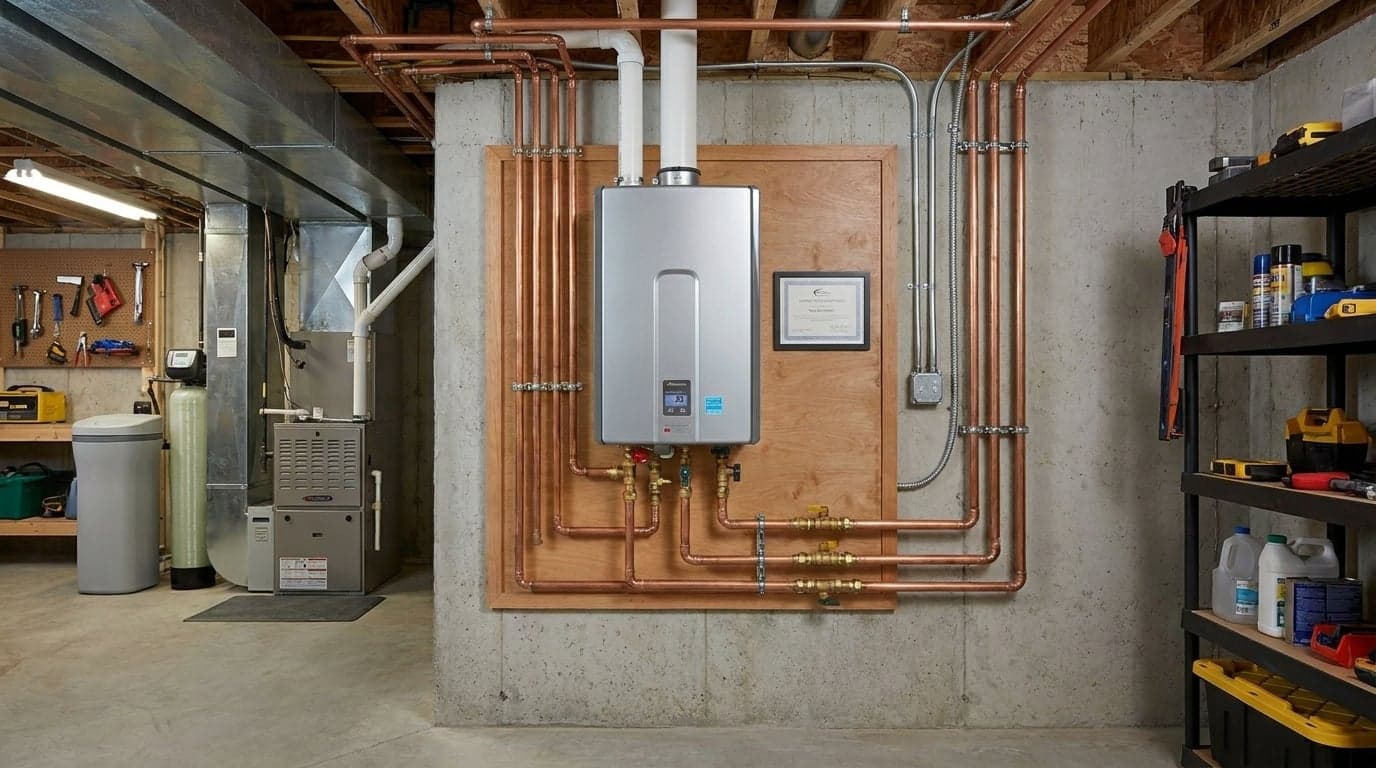
For a new build with a properly-poured slab, hydronic costs more than a forced-air system — you're paying for the tubing, manifold, boiler or heat-pump source, controls, and labor. The incremental cost is real, but so is the comfort and the operating-cost reduction. We quote every system in writing based on the floor plan and design loads.
Retrofitting an existing slab is harder; retrofitting over a wood subfloor is doable with TRACK or staple-up systems but adds height. We've done both. Each is spec'd to the house.
The running-cost comparison
A modulating-condensing boiler running radiant floor in Sandpoint typically costs 15–30% less per heating season than a forced-air gas furnace serving the same square footage. Why: lower water temperatures (105–120°F vs 180°F traditional), higher boiler efficiency at low fire, and no duct losses.
Pair it with a heat pump (air-to-water unit like a Chiltrix or Nordic) and the running cost drops further on milder days.
When we say no
We do not recommend hydronic for:
- Spec homes where the buyer won't care or notice the difference
- Quick flips — you won't recoup it in 3-year ownership
- Older homes with insufficient insulation (you're heating the outdoors)
- Homes that need cooling — radiant doesn't cool, you'll need a separate AC system anyway
When we say yes
- Custom homes you plan to live in 10+ years
- Lake-front homes where comfort is the point
- Mountain homes (Schweitzer, Hope) where forced-air struggles to keep up
- Bathrooms and basements as zone-only retrofits
We design and install full hydronic systems blueprint to commissioning. See our boilers & hydronic systems service for details.