The number-one mistake on DIY tankless installs (and a fair number of contractor installs) is sizing off the manufacturer's warm-climate spec sheet. A unit rated “3 simultaneous fixtures” in Texas is a 2-fixture unit in Sandpoint in February. Here's how we actually size them.
Step 1: figure out simultaneous demand
Walk through a worst-case morning at your house. For a typical 4-person family:
- One adult shower running: 2.0 GPM
- Kid shower (lower-flow head): 1.5 GPM
- Kitchen sink (someone making coffee): 1.0 GPM
- Master bath sink (toothbrushing): 0.5 GPM
Worst-case simultaneous load: 5.0 GPM. That's the number to size for, even if it only happens twice a week.
Step 2: temperature rise math (the cold-climate twist)
Tankless capacity is rated at a specific temperature rise. You need to bring water from incoming temperature up to set point (usually 120°F).
In Sandpoint in February, incoming groundwater is 38–42°F. To get to 120°F that's a ~80°F rise. A Phoenix install only needs a 40°F rise. Same unit, half the GPM in the cold months.
Step 3: pick the unit
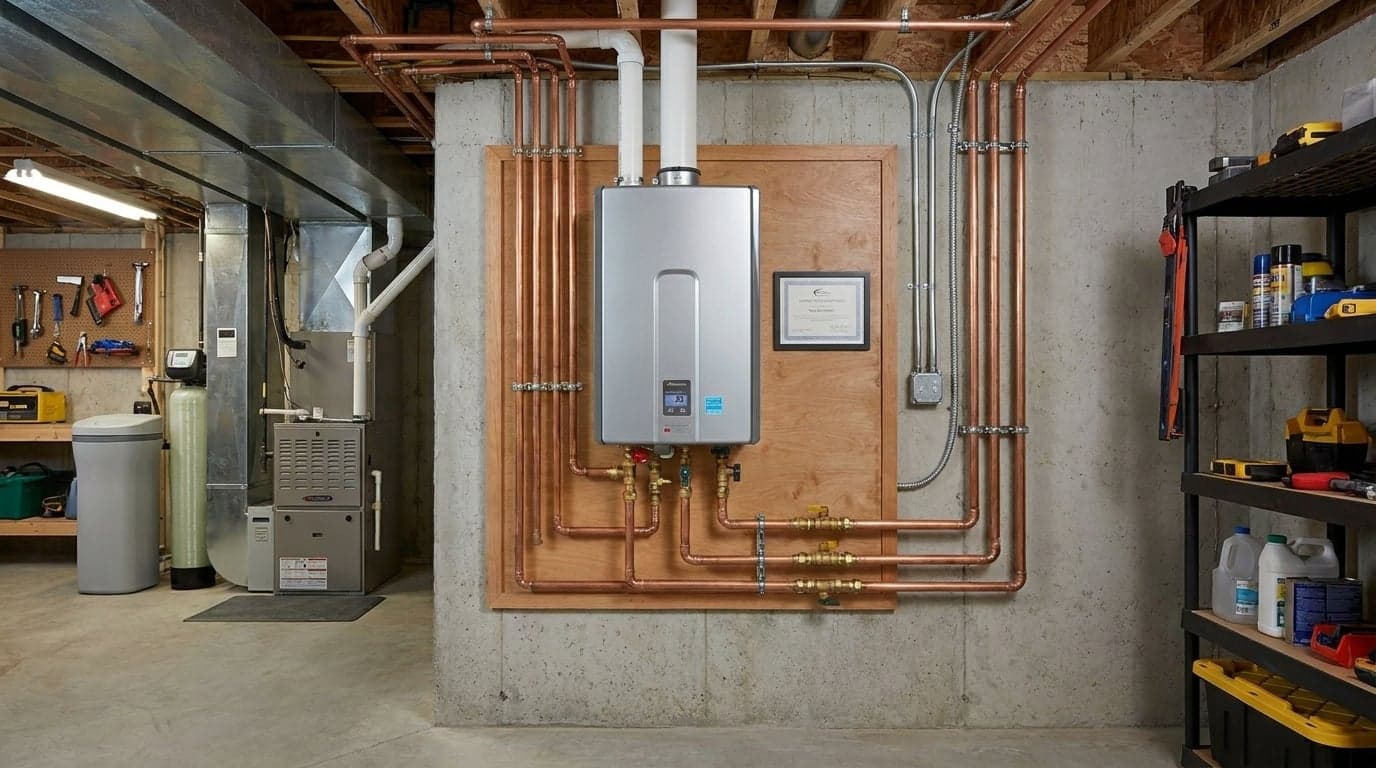
For a typical Sandpoint 4-person family with 5.0 GPM peak demand and 80°F rise, we spec:
- Navien NPE-240A2: 199,000 BTU input, ~5.5 GPM at 80° rise. Our most common pick.
- Rinnai RU199iN: same class, slightly different fault diagnostics and venting tolerance.
Both come with built-in recirculation logic, mobile app integration, and 15-year heat-exchanger warranties. Either is the right answer; pick based on installer familiarity (we install both equally).
Add a buffer tank if you have lake-house spikes
If your home is a vacation rental that spikes from 0 to 6 simultaneous fixtures when guests arrive — pair the tankless with a small (40–80 gal) buffer tank plumbed in series. Smooths out demand spikes the tankless can't recover from fast enough.
Want it sized for your actual house? We do free in-home estimates and we bring the spec sheets, the math, and the right answer. See our water heater service & install service or just call us.