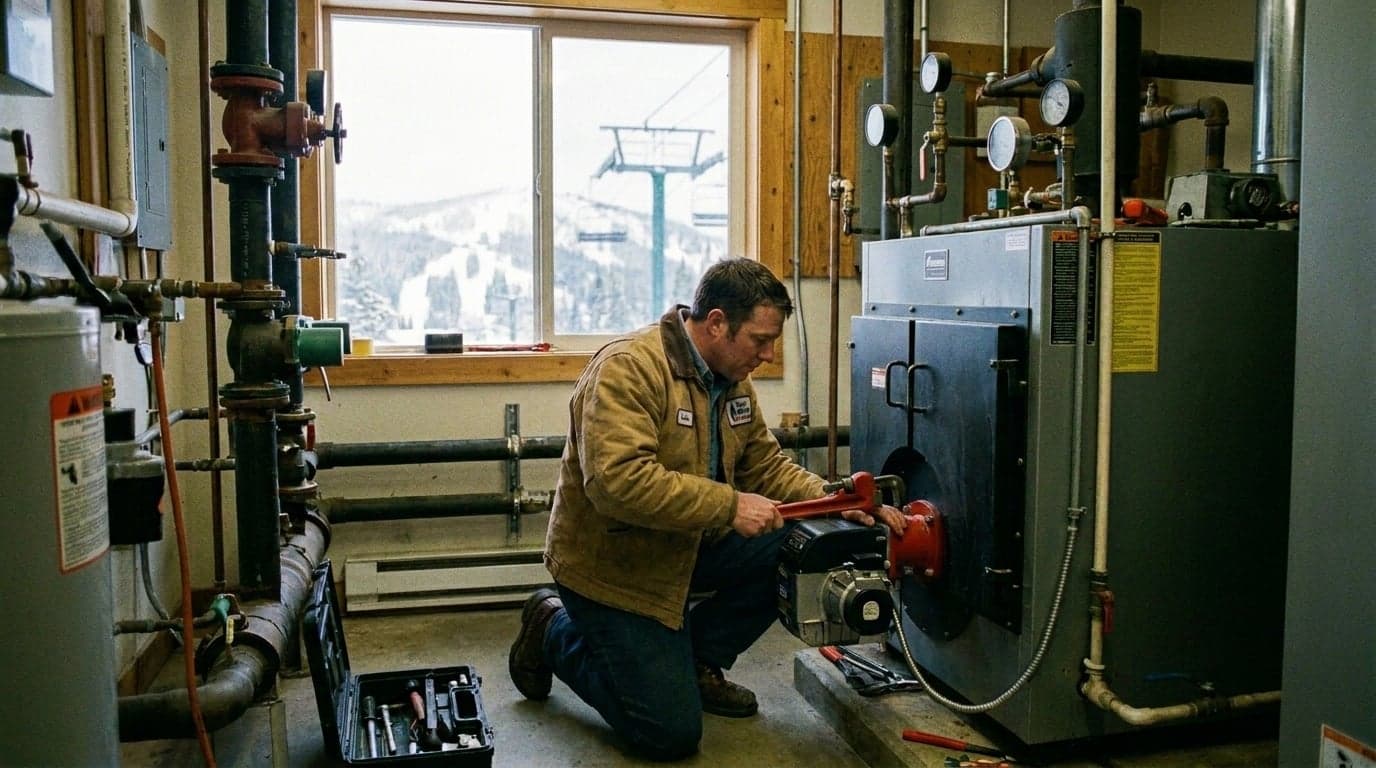
A lot of homeowners think “boiler service” means the tech glances at it, flips a switch, and writes you an invoice. That's not service — that's a drive-by. Here's what an actual annual boiler service looks like on our truck, every visit.
Pre-service inspection (15 minutes)
Before we touch anything, we inspect the system end-to-end. Vent and combustion air inlet for blockage, condensate trap and neutralizer, expansion tank pressure, system fill pressure, circulator pump operation, zone valves, low-water cutoff, glycol concentration if it's a heat-pump-side system.
The combustion analysis (20 minutes)
This is the test most service techs skip — and it's the one that actually tells us if your boiler is running right. We hook up a calibrated combustion analyzer at the flue, measure CO, CO₂, O₂, NOₓ, and stack temperature, then calculate your real combustion efficiency. You should get a printed report.If your guy isn't handing you one, ask why.
A modulating-condensing boiler running clean should hit 92–96% efficiency at the flue. If we see 80–85%, the burner needs adjustment. If we see CO > 50 ppm air-free, something is wrong. We don't leave until that report looks right.
The cleaning (45 minutes)
- Pull the burner; brush, blow, inspect electrodes and igniter
- Vacuum the heat exchanger fins and condensate pan
- Replace condensate neutralizer media if depleted
- Service the circulator pump cartridge if needed
- Cycle and test each zone valve
- Verify safety controls: aquastat, low-water cutoff, pressure relief, flue switch
What we leave with you
Printed combustion report. System log entry (we keep one for every boiler we service). Photos of anything noteworthy. Honest recommendations: what's good for years, what's tracking toward replacement, what should be done before next season.
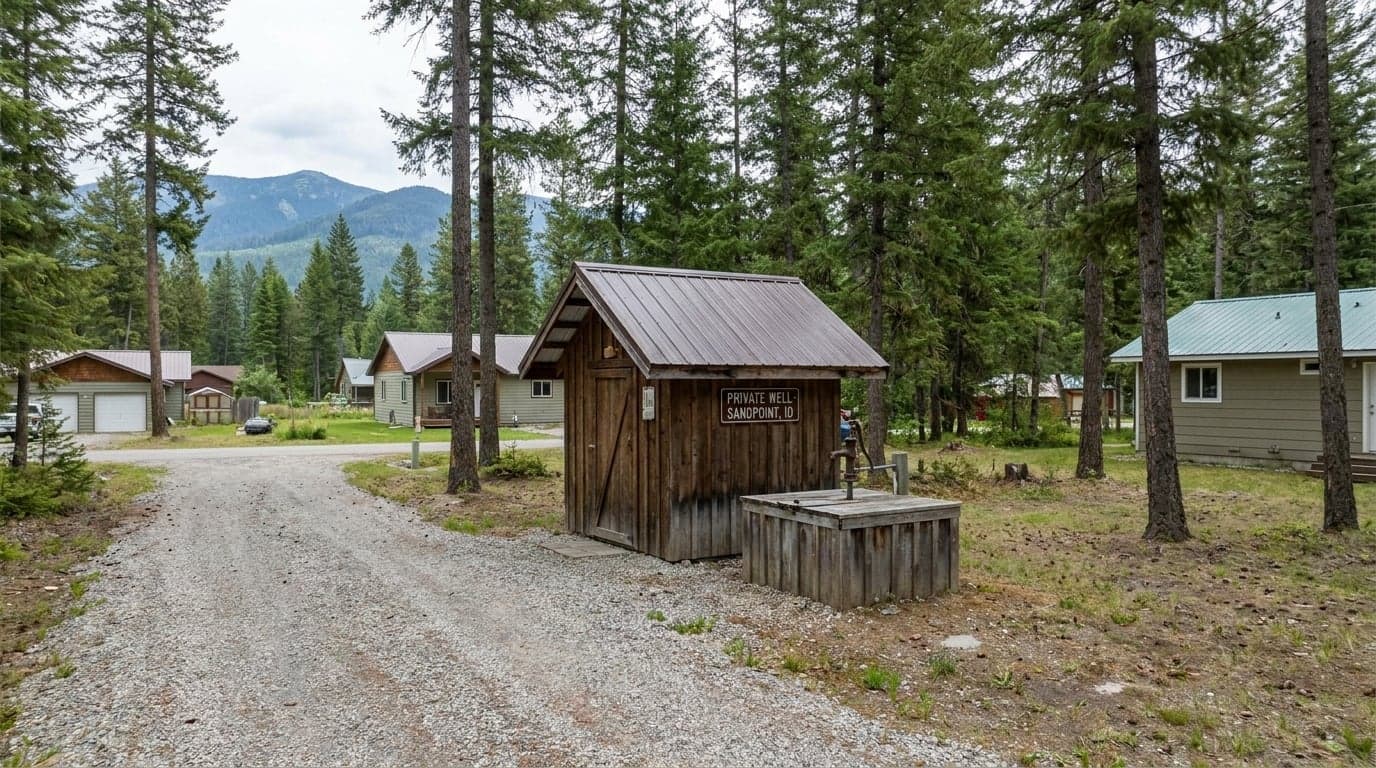
Why this matters in Sandpoint
A properly-tuned boiler costs roughly 10–15% less to run than a neglected one. Over a Sandpoint heating season (Oct–April), that's real money on the gas bill, more on propane. The annual service typically pays for itself the first winter. Plus you don't lose heat at 6am on a January Tuesday — which is the actual reason to do it.