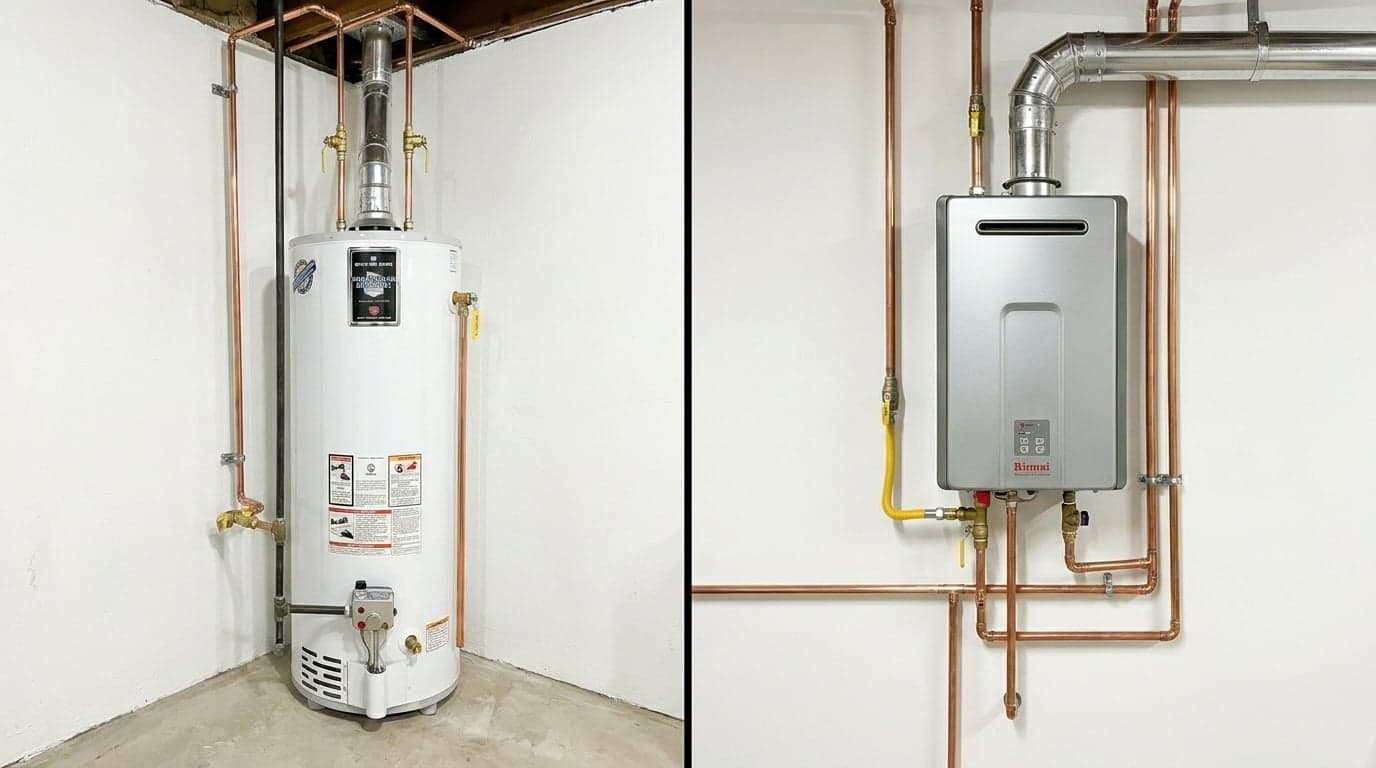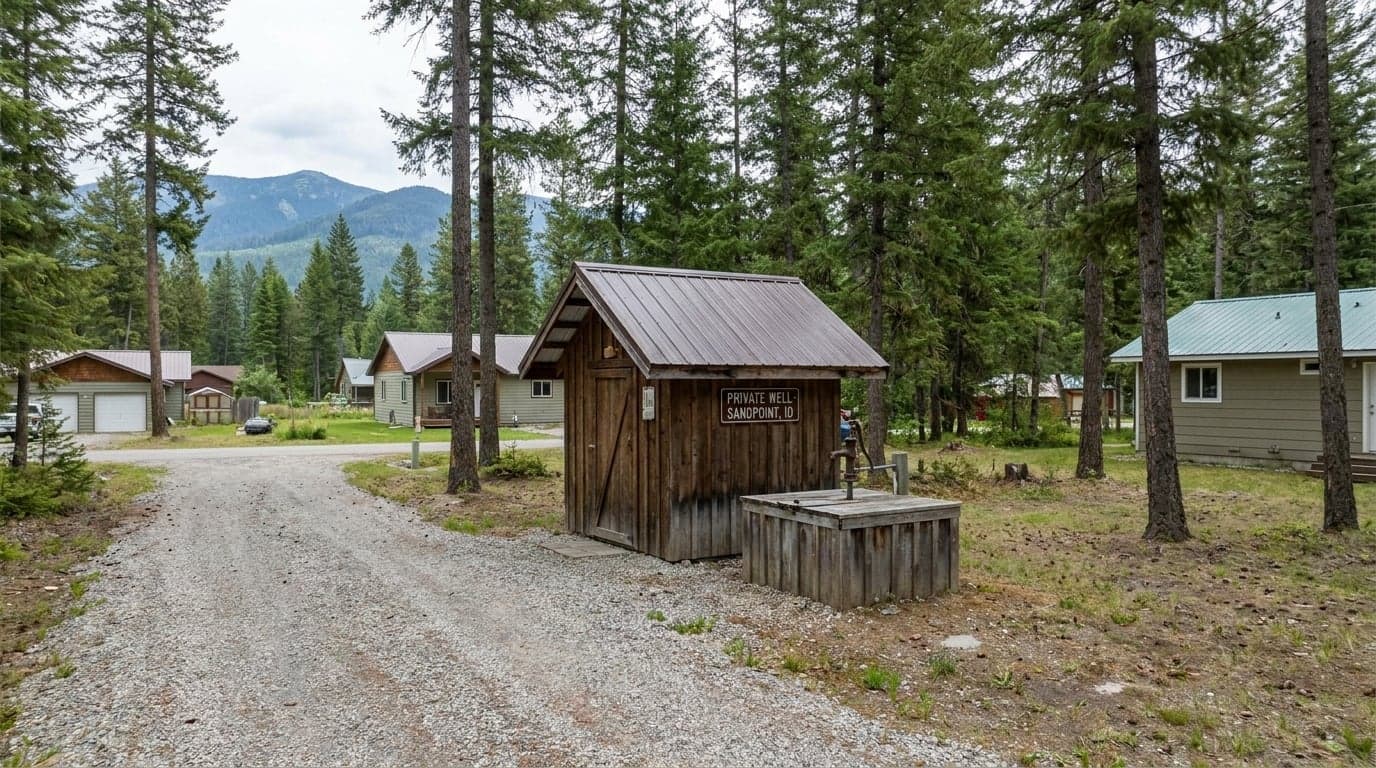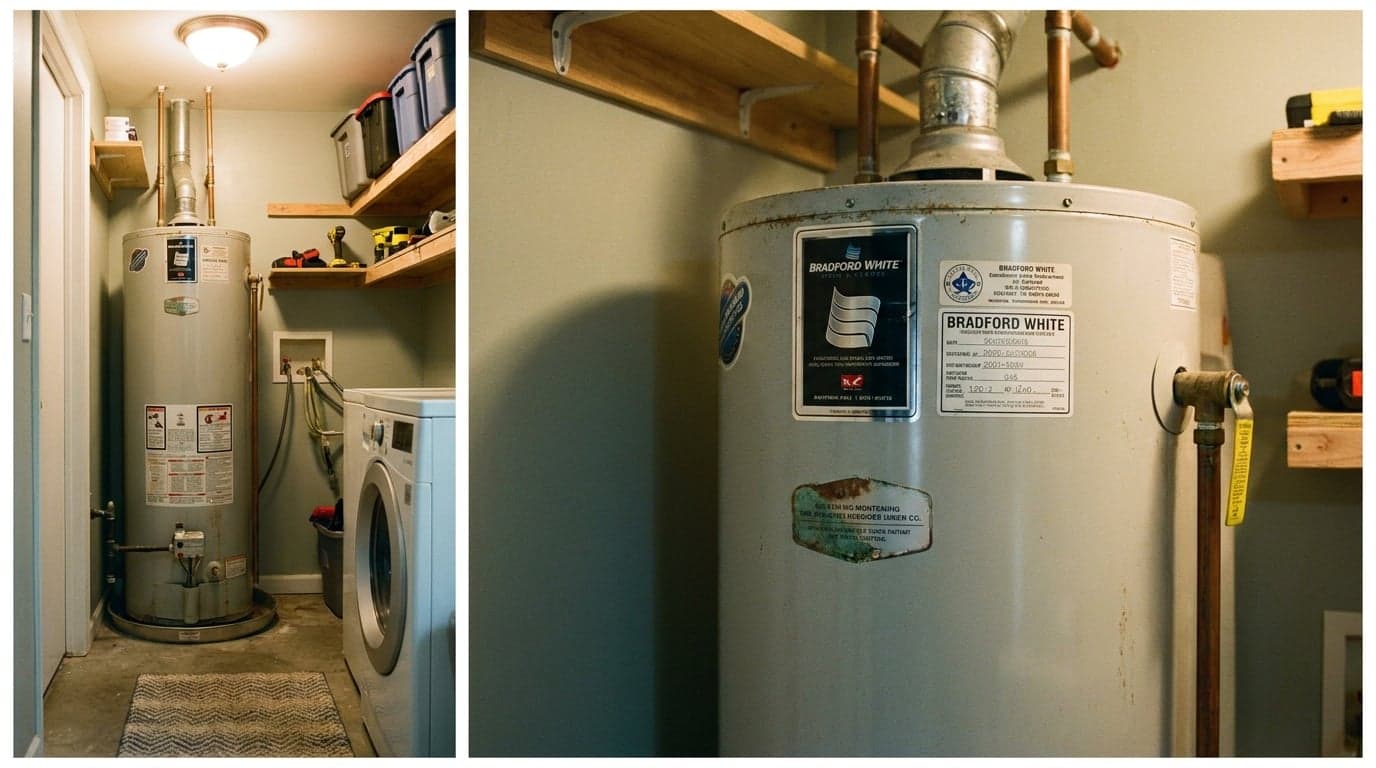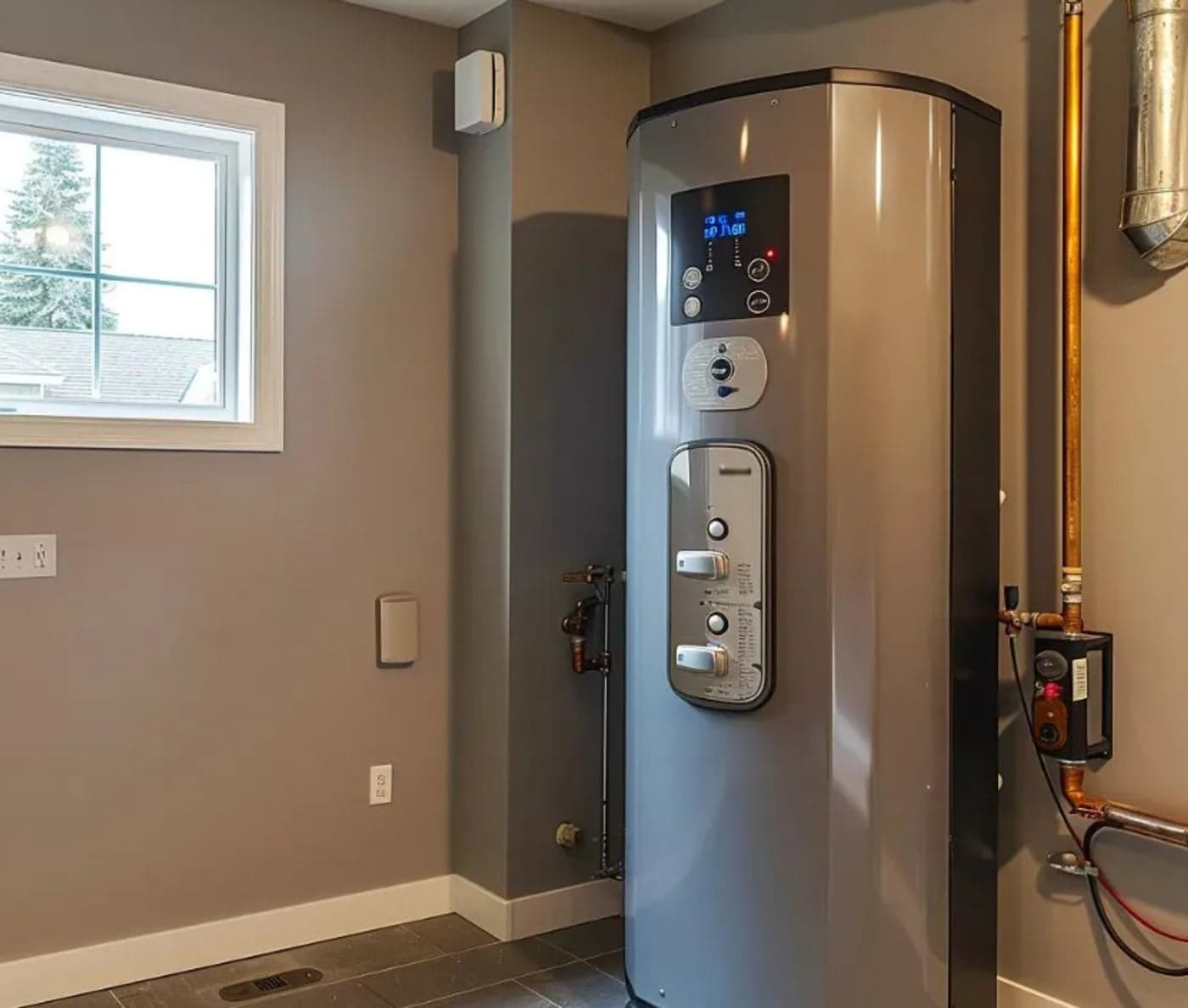
Hybrid heat-pump water heaters (HPWH) are 3–4× more efficient than standard electric tanks. They're also eligible for the federal IRA tax credit through 2032. In Phoenix, that's a no-brainer. In Sandpoint? It's more nuanced. Here's the real-world take.
How a HPWH works
Instead of generating heat with electric resistance elements, a HPWH pulls heat out of the surrounding air and transfers it to the water tank — like an air conditioner running in reverse. Its by-product is cool, dry air. Brilliant in a warm garage or basement; worse in a cold one.
The temperature problem
HPWH efficiency drops as ambient air temperature drops. Most units are rated for a minimum ambient of 37–45°F. Below that, they fall back to resistance mode — essentially becoming an expensive standard electric heater.
Sandpoint basements typically run 55–65°F year-round. Garages drop to 30°F or colder in February. So:
- Conditioned basement install: ✅ HPWH works great year-round. Real efficiency in N. Idaho around COP 2.5–3.0.
- Unheated garage install: ⚠️ HPWH falls into resistance mode for ~3 months/year. Still saves money overall, but less than the spec sheet suggests.
- Crawl space install:❌ Don't. Air volume is too small; unit short-cycles or freezes.
Real cost & payback
Install scope includes the unit, dedicated 240V 30A electrical (if not already present), condensate drain, and rebate documentation. Federal IRA tax credit and Idaho utility rebates frequently offset a meaningful share of install cost — we help you document both. Quoted in writing.
Operating savings vs standard electric: meaningful annual savings in N. Idaho with a basement install — the higher your usage, the bigger the win. Payback: a few years. After that, pure savings for the unit's remaining 12+ year life.
Models we install
- Rheem ProTerra (50, 65, 80 gal): our most-installed HPWH. Quiet, 10-year tank warranty, app control, and cold-climate-tested in Sandpoint and CDA basements.
- A.O. Smith Voltex (50, 66, 80 gal): equivalent class, slightly different controls. Either is a good answer.
When we say no
Garage installs in unheated outbuildings; tight closets without 750 cubic feet of surrounding air; homes with very high hot-water demand (HPWHs recover slowly — pair with a larger tank or skip).
Want to know if a HPWH makes sense for your specific home? We do free in-home assessments and run the math on your actual electric rate, install location, and household demand. See our water heater service & install service.